

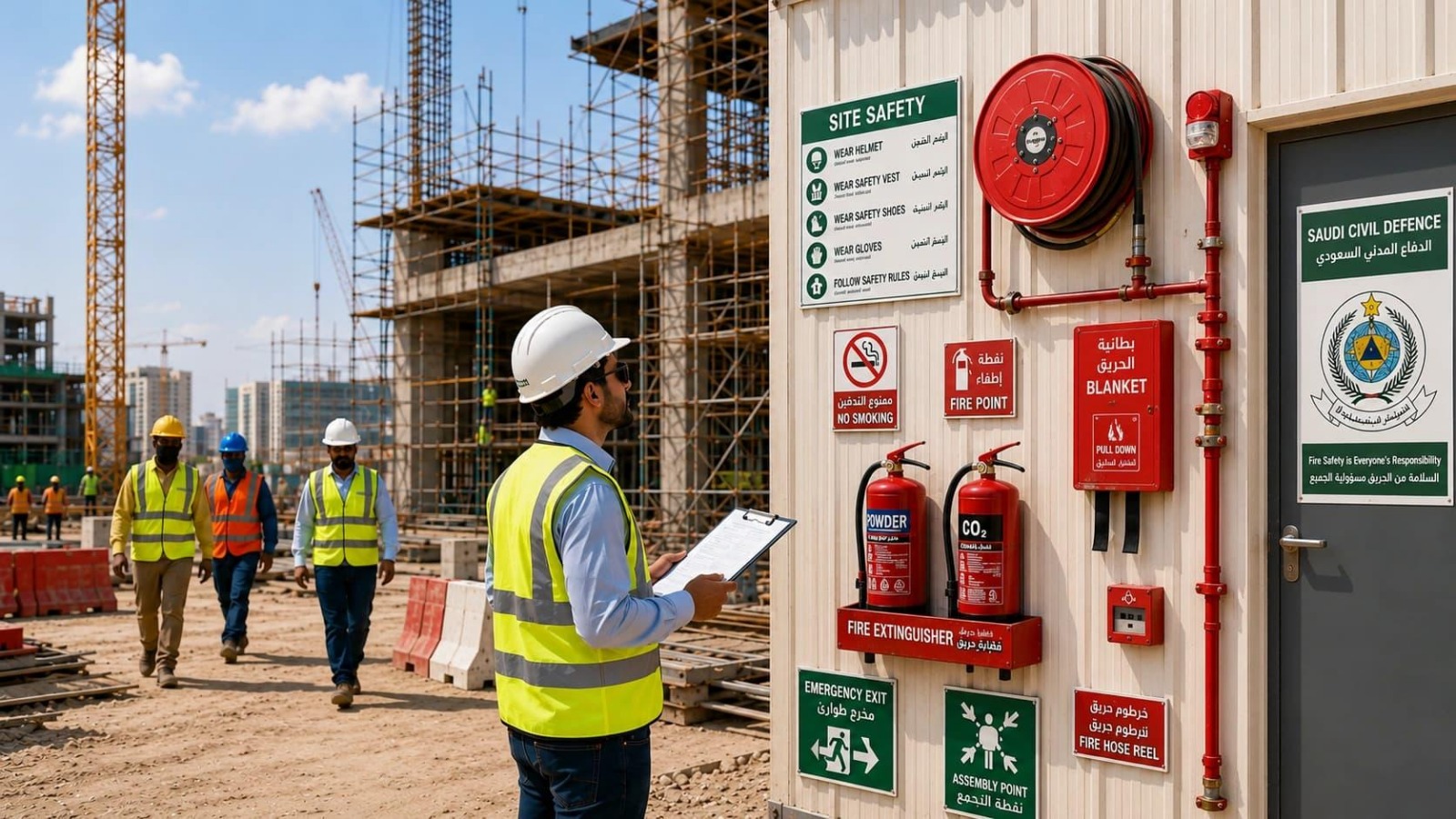
 Construction site fires in the GCC are not occasional. They are a persistent pattern. Most developers believe they are fully insured for fire risk during construction. Few have read what their cover actually excludes, what their contract actually allocates, and what their programme entitlement actually depends on. By the time a fire happens, those questions are too late.
1. The Pattern, Not the Event
Every few months across the UAE and KSA, a construction site fire makes the news. A tower under construction. A logistics hub being completed. A hotel mid-fitout. The cause varies — hot works, electrical fault, careless smoking, scaffolding combustion. The outcome rarely does. Programme delay. Insurance dispute. Cost dispute. And, in the worst cases, harm that no policy covers.
This is not a phenomenon developers should react to in the moment. It is a pattern that needs to be addressed before the contractor is appointed. The dry, hot conditions across the GCC summer months — combined with fast-track programmes, dense workforces, and the high volume of hot works during construction — create conditions where fire ignition is statistically frequent rather than exceptional.
The question for any developer commissioning a project in the region is not whether their contractor will experience a fire incident at some point in the project’s life. It is what their contract, their insurance, and their site protocols actually mean when one does.
2. Where the Developer’s Cost Exposure Sits
Most developers assume that the contractor’s all risks (CAR) policy or erection all risks (EAR) policy fully protects them. In practice, that is rarely the case. Several gaps recur in CAR / EAR cover that developers only discover after a claim:
- Standard CAR deductibles in the GCC typically range from USD 25,000 to USD 500,000 per claim depending on project value. A fire confined to a single floor can easily fall within the deductible threshold, leaving the cost with the developer.
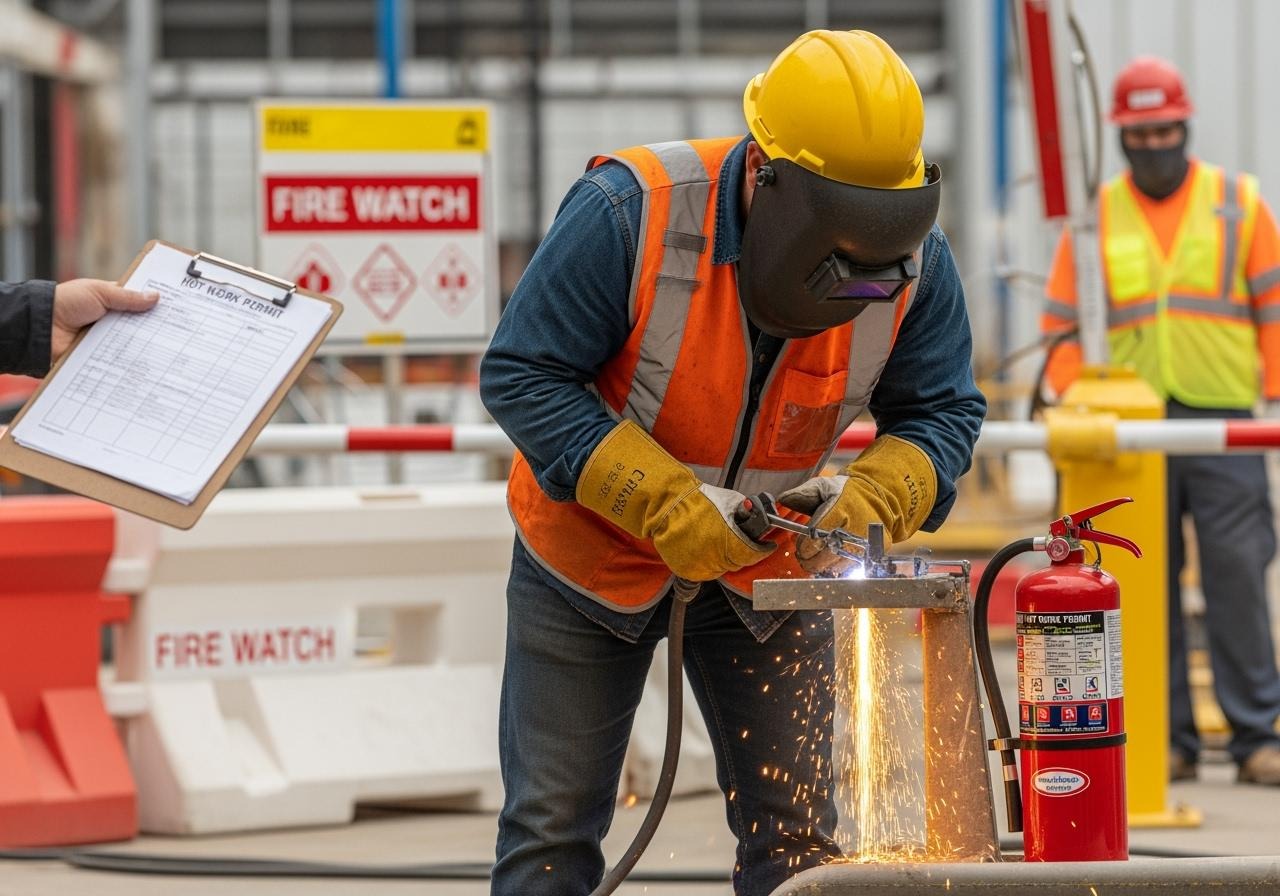
- Hot works exclusions. Most CAR policies are conditional on proper hot works permits, fire watch protocols, and materials clearance. A fire caused during unauthorised welding or cutting can be excluded from cover entirely — leaving the developer reliant on recovery from the contractor, which depends on the contractor’s solvency at the time.
- Advance Loss of Profits (ALOP). Material damage cover rebuilds what was burned. It does not compensate for the revenue lost during the delay. ALOP cover — which compensates for delay-related lost revenue — is often declined or undersized by developers at the insurance placement stage.
- Subrogation rights. Some policies waive subrogation against named insured parties; others do not. Developers should know which parties are named on their policy and whether the consultant team has been included.
- Defective design exclusions. If a fire spreads because of design or specification choices, coverage can be challenged on design defect grounds — even years after the original decision.
The shorthand: insurance is not a substitute for fire risk management. It is a partial recovery mechanism with material gaps.
3. Programme Impact — The FIDIC Question
A construction fire raises a contractual question that surprises many developers: who carries the time and cost of the delay?
Under FIDIC 1999 Red Book, the contractor takes responsibility for the care of the works until taking-over under Sub-Clause 17.2. Fire damage during construction is therefore generally the contractor’s risk — to restore at its own cost, with no automatic extension of time or additional payment.
This sounds like it favours the developer. In practice, it often doesn’t, because:
- A contractor required to absorb the cost and time of a major fire frequently becomes financially distressed, which generates downstream consequences — slow progress, sub-contractor disputes, escalating claims, even abandonment.
- If the fire is caused by an Employer’s Risk under Sub-Clause 17.3 (such as designs supplied by the Employer, or certain natural events), the allocation reverses — the developer carries the time and the cost.
- Force majeure or exceptional events may give the contractor extension of time but not additional cost — leaving both parties absorbing losses.
Under FIDIC 2017, the structure is similar but with sharper drafting on insurance obligations and joint-names cover under Clauses 17 and 19. The substance for developers is unchanged: fire risk allocation matters, and is rarely understood at the point of contract signature.
4. What Good Looks Like Pre-Contract
Fire risk is a pre-contract issue. The most effective decisions are made before the contractor mobilises, not after smoke is rising. Five protocols that developers should mandate in their Employer’s Requirements:
- Hot works permit system. A documented permit-to-work process for all welding, cutting, grinding, and brazing activities — formal, signed, time-bound.
- Fire watch protocols. A mandated fire watch period (minimum one hour, typically two to four) following completion of hot works, recorded with sign-off.
- Materials storage discipline. Combustible materials stored away from work areas, with daily quantities controlled and storage zones segregated.
- Fire fighting equipment. Portable extinguishers at every active work area, fire hose connections operational before structure reaches three floors, and evacuation drills documented monthly.
- Authority compliance. UAE Fire and Life Safety Code 2018 and KSA Civil Defence requirements — confirmed compliance documented and certified.
These are specific, contractable provisions. They cost the developer nothing to insist on at the right stage. They cost a great deal to retrofit after a contract is signed.
5. What Good Looks Like in the Contract
Beyond the Employer’s Requirements, the contract itself should address fire risk in four places:
- Insurance schedule. CAR/EAR policy terms, deductibles, named insured parties, ALOP requirements, and hot works conditions should be reviewed line by line before contract signature — not accepted as a contractor-supplied template.
- Risk allocation. Sub-Clause 17.2 (FIDIC 1999) or Clause 17 (FIDIC 2017) should be reviewed to confirm which party carries fire risk and under what circumstances. GCC amendments frequently alter the standard position — developers should know what has been amended and why.
- Programme obligations. The contractor’s obligation to prepare and maintain a recovery programme following an insured event should be explicit. Without it, the programme consequences of a fire sit in a contractual grey zone.
- Reporting requirements. Monthly fire safety compliance reporting — not just the contractor’s HSE plan, but evidence of implementation: permit logs, fire watch records, materials storage audits, drill attendance.
6. The TCC View
Fire risk is one of the clearest illustrations of why early QS appointment matters. A cost consultant engaged at feasibility can address fire risk in the brief. One engaged at concept can address it in the Employer’s Requirements. One engaged at tender can review the insurance schedule and contract conditions. One engaged after contract signature can do little except watch the consequences of decisions taken without them.
TCC’s position is straightforward: developers should treat fire risk as a pre-contract commercial issue, not an operational risk that quietly lives with the contractor. The cost of doing this is small. The cost of not doing it can be the project itself.
Conclusion
Construction site fires in the GCC will continue to occur. The question for any developer commissioning a project is not whether their site will experience an incident at some point in the coming years. It is whether their contract, their insurance, and their pre-contract decisions mean that when it does, the project survives it commercially.
| The firms that approach fire risk structurally — before contract signature, in writing, with rigour — recover from incidents. The firms that approach it reactively often do not. |
This document is intended solely for the informational purposes of those concerned and should not be relied upon as expert advice in any circumstance without consulting an expert professional. Reproduction or translation of this information is not permitted without explicit written consent from www.tccons.ae..
For additional details, please reach out to info@tccons.ae